


By Lu Jin & Meltem Singh
A Macro Inflection Point, Not a Cycle:
The venture capital landscape in 2025 crossed a decisive threshold with AI-related startups capturing nearly 50% of all global funding.
In healthcare specifically, AI-enabled startups secured over $18 billion across the U.S. and Europe, representing nearly half of all healthcare investment.
While the implications of this revolution are broad, the most immediate and measurable impact is occurring within the administrative workflow, operations, and compliance segments.
In the U.S. alone, healthcare spending exceeds $4 trillion annually, with an estimated $300 billion lost each year to administrative operating expenses (OpEx) - much of which is consumed by repetitive, labor-intensive processes.
Generative AI is uniquely positioned to collapse these costs, offering a systemic invisible infrastructure shift that reclaims the most valuable resource in clinical systems: Clinician time.
The Physician’s Reality: Structural Friction at Scale
To understand the investment opportunity, one must look at the structural friction defining a physician’s typical day:
The Inbox Avalanche:
Doctors often begin their day with an hour-long surge of 50–100 messages, ranging from lab flags to routine patient anxieties.
Documentation Burden:
For every 15-minute exam, approximately two-thirds of the visit is effectively duplicated through manual EHR entry.
The Prior Authorization Purgatory:
Essential specialty drugs are often denied, forcing doctors and assistants into a multi-week administrative escalation cycle insurers.
The Outdated Default:
Patients who could recover safely at home often remain in $3,000-per-night inpatient beds because the administrative friction of coordinating home care is operationally prohibitive.
Consequently, these are not edge cases. They are systemic constraints that suppress clinical capacity, accelerate burnout, and compress margins across care settings.
Industry Moves From Point Solutions to an Integrated AI Operating System “aiOS”
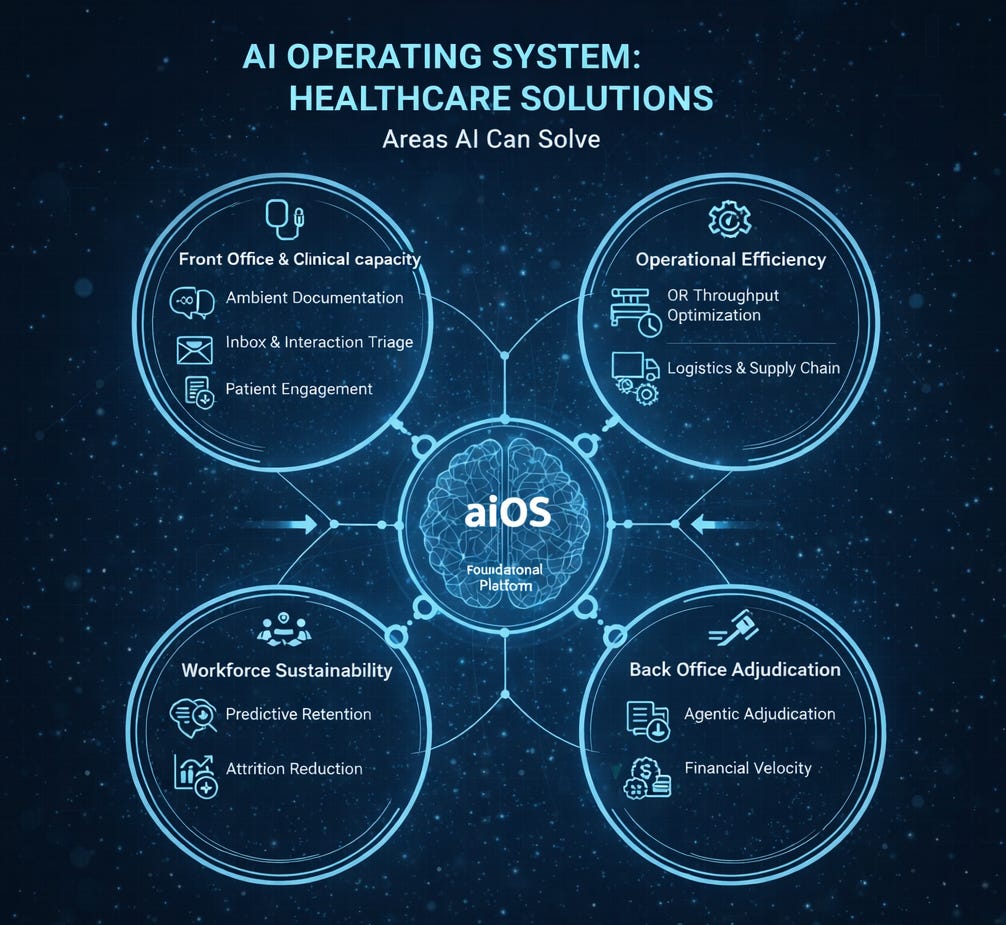
AI is no longer just a feature layer; it is being architected to serve as an integrated AI Operating System (aiOS) - a foundational platform that coordinates activity across clinical, operational, and financial workflows, directly impacting hospital margins. Key areas of impact include:
1. Front Office & Clinical Capacity: Reclaiming the “Super-Physician”
The goal is to turn the clinician from a data clerk back into a healer by automating the “low-signal” documentation and communication noise.
Ambient Documentation: AI transitions charting from a manual chore to a background process, reclaiming ~30% of clinical capacity.
Inbox & Interaction Triage: Autonomous agents resolve 80% of routine inbox interactions and documentation. By providing high-quality decision support and handling routine queries, AI ensures physicians engage only with high-signal, judgment-intensive cases.
Patient Engagement: AI enhances the connective tissue between patients and health systems, improving interaction efficacy and customer satisfaction through personalized, real-time engagement.
2. Operational Efficiency: Maximizing Asset Yield
AI acts as an enterprise Command Center, optimizing the utilization of physical and supply-chain assets.
OR Throughput Optimization: AI predicts “Block Under-utilization” in real-time. By automatically releasing unused slots 48 hours in advance, hospitals can drive a 15–20% increase in OR revenue without adding staff or infrastructure.
Logistics & Supply Chain: AI-driven systems improve supply chain arrangements and operational logistics, ensuring resources are synced with real-time floor occupancy and demand.
3. Workforce Sustainability: Defending the Human Capital
Rather than relying on static spreadsheets, AI uses behavioral insights to prevent the high cost of clinician turnover.
Predictive Retention: By applying Sentiment Analysis to schedules and workflows, AI flags burnout risk before it leads to attrition.
The Cost Reduction of Attrition: Preventing turnover is a direct margin protector, as a single nurse turnover event can cost a health system up to $1 million in replacement and productivity losses.
4. Back Office Adjudication: Autonomous Financial Operations
AI transforms the “Back Office” from a cost center into a high-speed transaction engine.
Agentic Adjudication: AI establishes medical necessity in milliseconds, turning the Prior Authorization bottleneck into a seamless background transaction.
Financial Velocity: Beyond authorization, AI improves the efficiency of coding and the broader financial system, accelerating the revenue cycle and reducing administrative leakage.
Exhibit1: AI Operating System: Healthcare Solutions
Institutional Momentum: Capital Is Following Infrastructure
Venture firms are doubling down on healthtech infrastructure because it is mission-critical, massively scalable, and replaces aging, fragile systems.
Big Tech Integration: The market is consolidating. OpenAI’s acquisition of the AI health records company Torch signals a move toward unified patient data layers. Simultaneously, Anthropic’s launch of Claude for Healthcare introduces health insurance portability and accountability act (HIPAA)-ready tooling designed for secure, enterprise-grade deployments.
Y Combinator has funded 560+ healthcare startups, with an emphasis on workforce optimization and automated communication.
Sequoia Capital highlights platforms spanning the hospital lifecycle, from patient engagement and care decision-making to revenue cycle management (RCM).
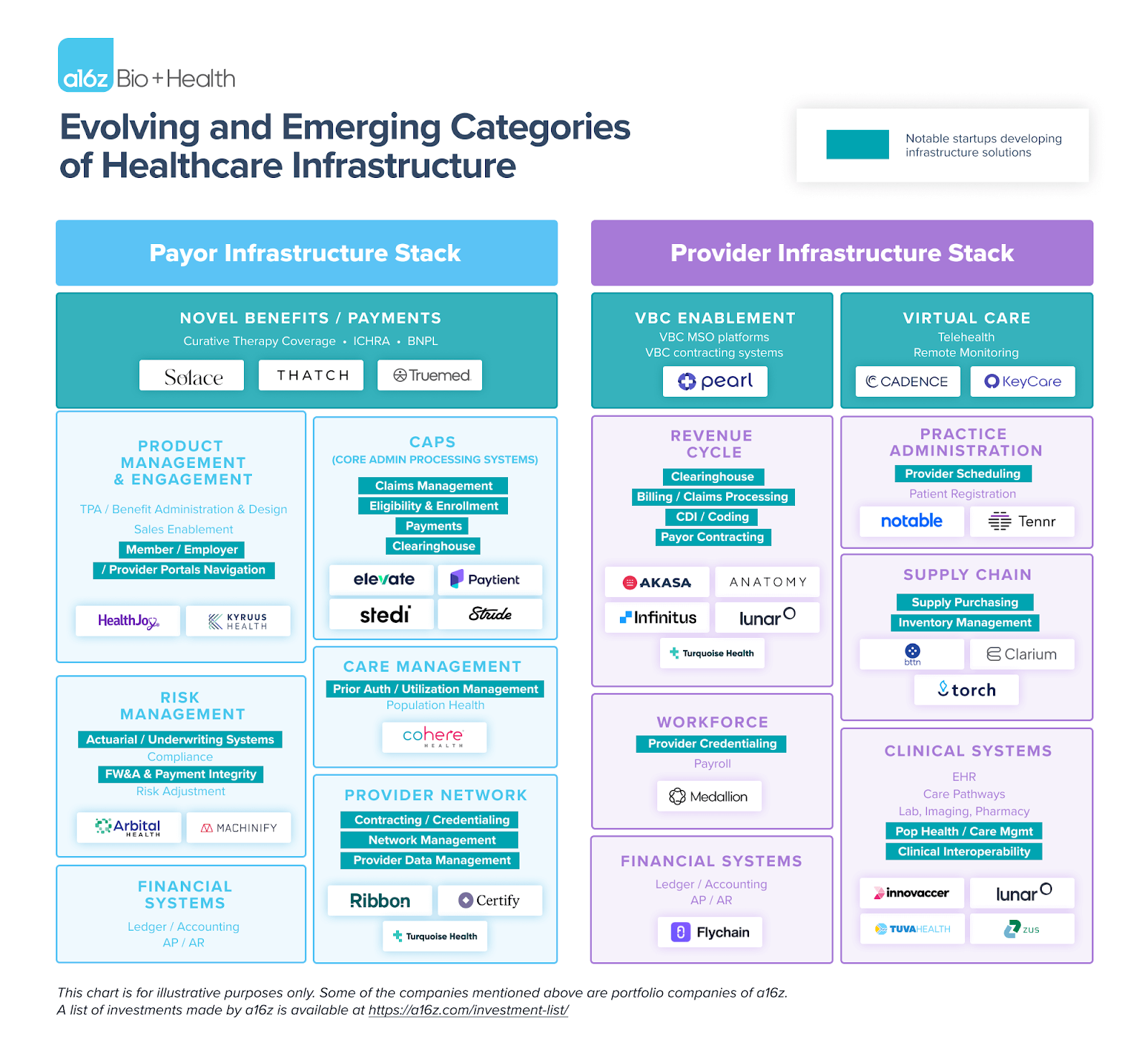
Andreessen Horowitz frames this as a once-in-a-generation opportunity to rebuild healthcare’s core systems, citing massive markets, obsolete incumbents, and regulatory tailwinds.
Exhibit 2: Front vs. Back Office: Sequoia’s Healthcare AI Landscape
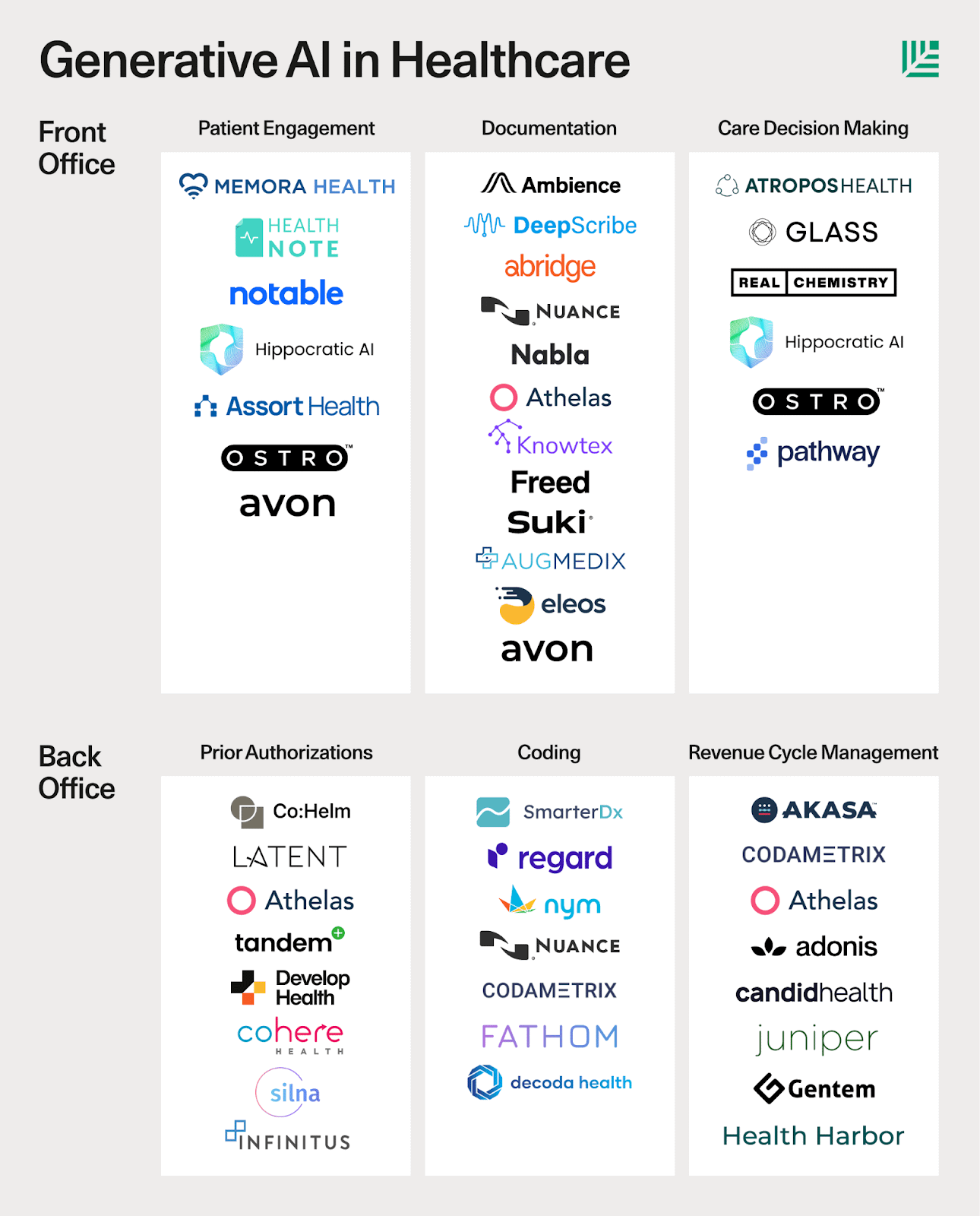
Exhibit 3: a16z Healthtech Infrastructure: The $1B+ Cohort
The 2026 Outlook:
‘Pilot Fatigue’ Marches Beyond The Pilot
As we move through 2026, “Pilot Fatigue” has officially given way to enterprise deployment. Health systems are no longer questioning the efficacy of AI; they are racing to integrate it to defend margins, retain clinicians, and scale care delivery.
For founders, investors, and leaders alike, the mandate is clear:
This moment is structural, and the strategy for building high-growth startups is now centered on Systemic Realignment - platforms that collapse complexity, integrate deeply into operations, and demonstrate measurable impact at scale. This means moving beyond fragmented “point solutions” to create products that either disrupt or seamlessly integrate with the broader healthcare ecosystem.
The Two Paths to Realignment
We identify two distinct ways for startups to demonstrate market potential and undeniable traction:
Structural Displacement (The “Disruptor” Path): This involves establishing a fundamental, one-time change that disrupts legacy systems, unlocking significantly higher margins. By virtualizing labor-heavy administrative roles, startups can deliver a “step-function” improvement in cost efficiency.
Ecosystem Orchestration (The “Integrator” Path): This path focuses on seamless incorporation into existing large platforms (e.g., Epic or Cerner). By merging or connecting to the current stack, startups provide a more cost-effective, easy-to-use operation that remains compliant with evolving regulations.
The Action Mandate
The current “gathering storm” of rising costs is only a threat to legacy inefficiencies. For investors and leaders, the mandate is clear: This moment is structural, not speculative. Those who architect the AI operating systems of healthcare will define its economics for the next decade:
Do Not Wait for the Momentum to Pass.
The most successful teams are “hunkering down“ to rebuild the industry’s foundations, not waiting for a market correction.
Prioritize Architectural Cohesion.
Founders must move beyond the “Point Solution Era“ and architect for systemic realignment. The mandate is to build a mission-critical aiOS that replaces or orchestrates fragile legacy systems.
Focus on Physician Adoption.
With 93% of doctors using ambient AI reporting they can finally give patients their “full attention,” the winners will be those who save the clinician’s time and improve their efficiency permanently.
Move Beyond the “Efficiency” Trap: Revenue Acceleration.
Efficiency is defensive; Capacity Expansion is offensive. Investors must look for founders who pivot from “saving time” to “ aggressive cost reduction or revenue expansion”.
At Bouken, we are actively looking for visionary founders building the next generation of Systemic Realignment in Healthcare, Lifescience, and Wellness. If you are developing a solution that collapses administrative complexity, integrates deeply into operations, and demonstrates measurable impact at scale, we want to hear from you.
In our next chapter, we will explore how AI is facilitating the next frontier in healthcare: Data Documentation & Analytics.
About the Authors
Lu Jin is a Venture Fellow at Bouken Capital and a PhD candidate in Bioengineering at UC Riverside, with a focus on biomaterials and regenerative medicine. As a Market Research Scientist at GelTech, she bridges deep-tech development lifecycles with venture strategy. Independently, her interests center on early-stage biotech and medtech ventures, AI infrastructure, and academic research translation.
Meltem Singh is an Investment Venture Partner at Bouken Capital and a seasoned executive driving transformation across the healthcare and life sciences sectors. Managing Partner at a leading consulting firm and an OpenAI Forum member, Meltem has led $500M+ strategic initiatives for C-suite teams. She specializes in bridging technical fluency with business value to accelerate the responsible adoption of AI.